
Oh SH*T, Condo's here
Condolezza Rice was seen at The White House

This week, former Secretary of State Condoleezza Rice was spotted entering the White House during a moment of escalating tensions between the United States and Iran. The sighting immediately raised questions across Washington. Rice is not just another former official making a ceremonial visit. She is one of the central architects of the American foreign policy that shaped the post 9/11 world, particularly the war in Iraq.
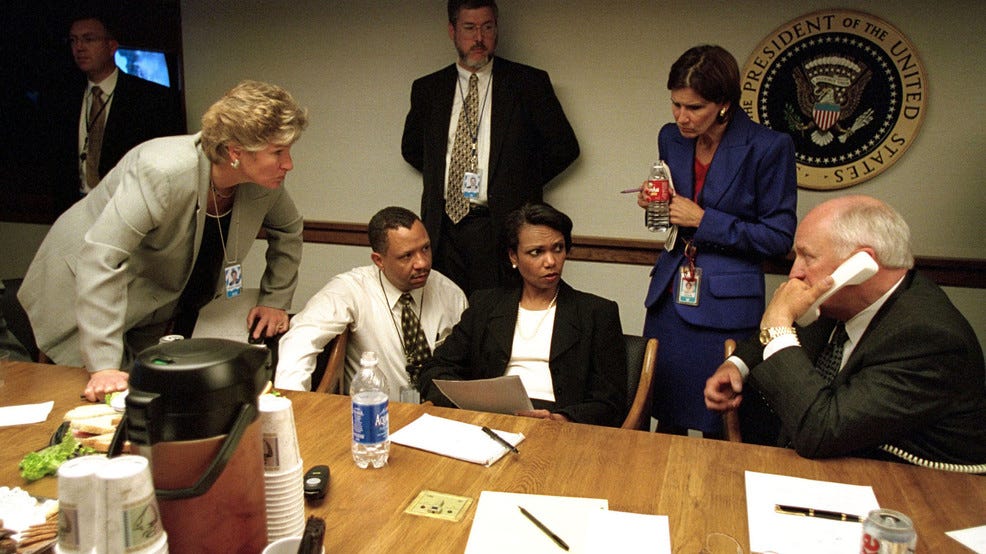
Before we understand why her presence matters now, it is important to understand who she is and the role she has played in American power.
Condoleezza Rice rose from academia to become one of the most influential foreign policy figures of the early twenty first century. She served as National Security Advisor to President George W. Bush from 2001 to 2005 and later as Secretary of State from 2005 to 2009, making her the first Black woman to hold both positions. During those years, Rice helped shape the Bush administration’s response to the September 11 attacks and the wars that followed. She was a central voice in the administration’s argument that American security required aggressive action in the Middle East, including the 2003 invasion of Iraq.
That war, justified at the time by fears of weapons of mass destruction and regional instability, reshaped the Middle East and remains one of the most controversial decisions in modern American foreign policy.
Which is why her appearance now, during another potential Middle East war, matters.
Why She Is Suddenly Relevant Again
Rice’s visit comes as the Trump administration is deeply engaged in a military confrontation with Iran. U.S. and Israeli forces have been striking Iranian military infrastructure, and the White House has signaled that it expects to control Iranian airspace in the coming weeks.
At the same time, Iran has vowed retaliation and the conflict has already spread across the region, with hundreds killed and oil markets rattled.
Against that backdrop, Rice has publicly argued that Iran’s military capabilities should be dismantled, saying the goal should be to render Tehran incapable of threatening the United States.
Officially, the White House said Rice attended a roundtable discussion on college sports. But she was also seen speaking with President Donald Trump and senior staff afterward, which has fueled speculation about whether she was there to advise on the escalating conflict.
And that speculation is not unreasonable.
Rice is one of the few remaining Republican foreign policy figures with experience managing large scale Middle East conflicts.
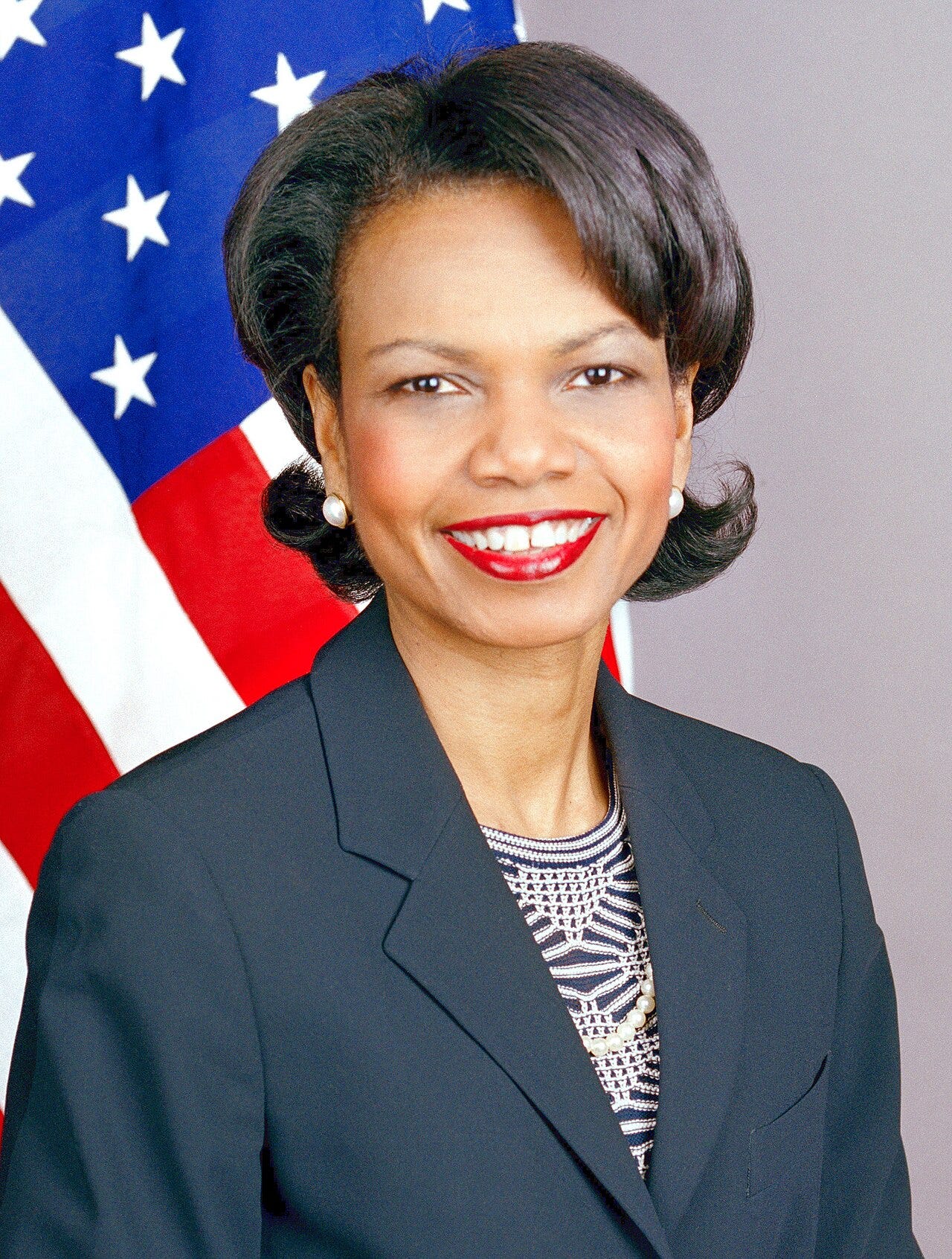
The Ghosts of the Iraq War
There is another reason her presence carries weight. Most of the figures who helped craft the Iraq War strategy are gone.
Vice President Dick Cheney is retired from politics.
Defense Secretary Donald Rumsfeld died in 2021.
Secretary of State Colin Powell died the same year.
Rice is one of the last surviving members of that inner circle.
That matters because the strategic framework used in Iraq, the idea that American power could reshape the political order of the Middle East, still echoes in current discussions about Iran.
The question facing Washington now is hauntingly familiar.
Can military force fundamentally change the political structure of a Middle Eastern state?
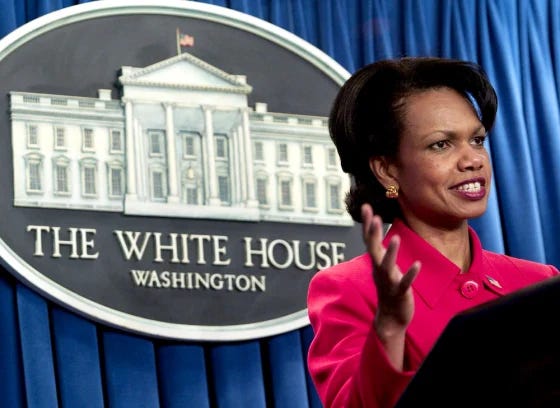
U.S. intelligence agencies themselves are skeptical. A recent assessment concluded that even a large scale assault is unlikely to topple Iran’s political system because its leadership structure is deeply entrenched.
That warning sounds eerily similar to the lessons many analysts say should have been learned from Iraq.
What the Trump Administration Might Want From Her
If Rice is being consulted, even informally, there are several reasons why.
First, she understands the architecture of American power in the region. She has spent decades dealing with NATO alliances, Gulf partnerships, and the delicate balance between Israel, Saudi Arabia, and Iran.
Second, she has experience navigating the political messaging around war. During the Iraq invasion, the Bush administration had to sell a controversial military campaign to Congress, the public, and international allies.
Third, she represents continuity with an earlier Republican foreign policy establishment, one that Trump often rejected but may now find useful as the crisis deepens.
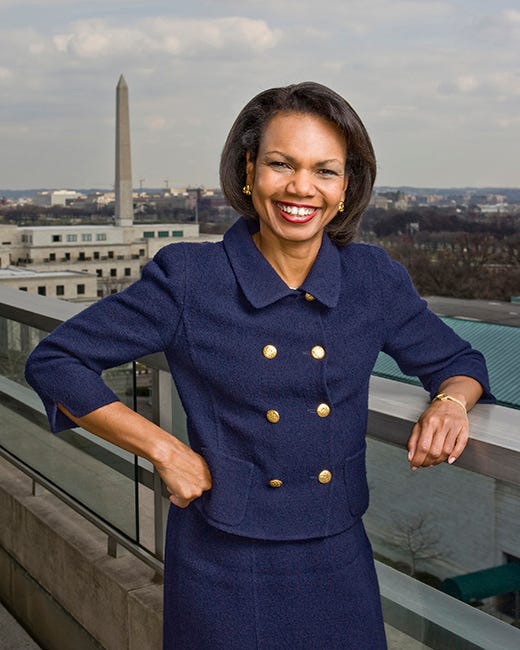
In short, if a conflict with Iran grows larger, the administration may want someone who has already managed a war of that scale.
The Deeper Question
Condoleezza Rice walking into the White House is not just a random news item.
It is a reminder of how American foreign policy tends to recycle its architects.
The same generation that shaped the wars of the early 2000s still hovers over the decisions being made today.
And the question that should worry everyone is simple.
Are we watching the beginning of a new war, or the repetition of an old one?
I hope she’s not silly enough to be their sacrificial lamb, because none of them respect Black women.
Oh, my, you mean the superior white boys can’t figure this out? The need the Black Auntie? You don’t say.