
Cuban education
How to learn english

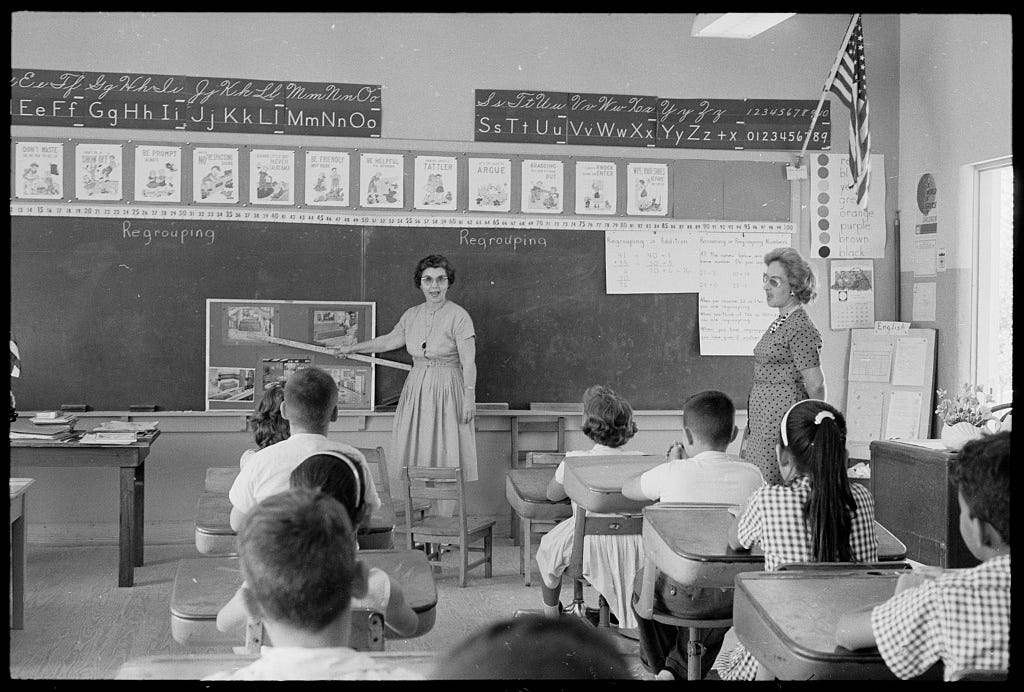
This photograph captures one of the most transformative moments in the history of both Miami and the modern Cuban diaspora. At first glance, it looks like an ordinary elementary classroom: children sitting quietly at desks, a teacher explaining math on a chalkboard, American flags hanging in the room. But historically, this image represents the beginning of a massive cultural and political shift that permanently changed South Florida.
The children in this classroom were likely part of the first major wave of Cuban refugees arriving in the United States after the 1959 Cuban Revolution led by Fidel Castro. During the late 1950s and throughout the 1960s, hundreds of thousands of Cubans fled the island after the overthrow of Fulgencio Batista and the rapid restructuring of Cuban society under Castro’s government.
For many families, Miami became the first landing point.
What makes this image historically important is that it captures the moment where exile became institutionalized. These were not tourists or temporary migrants anymore. Schools, churches, neighborhoods, and government agencies in Miami had to rapidly adapt to an entirely new population arriving almost overnight.
You can actually see that transition inside the classroom itself.
The room is unmistakably American:
the alphabet charts,
arithmetic lessons,
the American flag,
orderly postwar classroom design.
But the students represent a population that, in many cases, spoke little or no English and had recently arrived from a country undergoing revolutionary upheaval.