
"Michelle Obama is a man"
How Black Women have been ascribed Masculinity throughout history

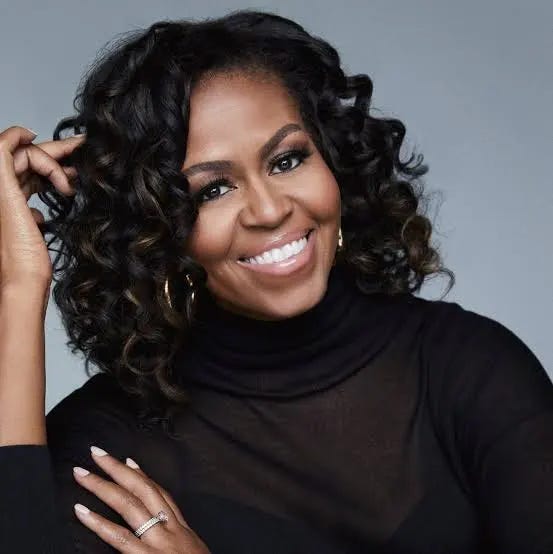
In the shadows of both history and our present-day discourse, Black women have endured a unique and painful distortion of their identity. The masculinization of Black women is not a recent phenomenon nor a mere social media slur—it’s a deeply rooted historical pattern. To truly understand why these attacks persist, we must go back to the 19th century, when pseudo-scientific fields flourished in service of racial oppression.
During slavery, enslaved Black women were depicted as possessing superhuman strength and endurance—not to honor them, but to justify brutal labor practices. Popular pseudo-scientists like Samuel Cartwright proposed theories about “innate differences” between Black and white bodies. These dehumanizing narratives framed Black women as more masculine, less fragile, and crucially, less deserving of empathy.
This myth became the foundation for medical exploitation. J. Marion Sims, often called the “father of modern gynecology,” performed repeated experimental surgeries on enslaved Black women without anesthesia. He justified this by arguing that Black women’s bodies had a higher tolerance for pain—an entirely fabricated premise. In these operating rooms, Black women’s supposed “masculinity” was weaponized to deny them humane treatment.
As these scientific myths entrenched themselves, popular culture added its own layer. The “strong Black woman” archetype emerged on the surface, a symbol of resilience, but beneath it, a refusal to recognize vulnerability or humanity. These caricatures suggested that Black women could endure anything pain, hardship, dehumanization—and that they didn’t need protection or gentleness. In essence, the same logic used to justify exploitation was now recast as “empowerment,” but it still denied Black women softness, complexity, and rest.
Fast forward to today, when public figures like Michelle Obama are called “masculine” as an insult, we must recognize these comments are echoes of a centuries-long tradition. This is not about one person’s appearance; it’s about a historical narrative that has consistently sought to diminish Black women’s humanity.
Ultimately, understanding this historical arc helps us dismantle it. When we expose these narratives for what they are—tools of power and control we can begin to replace them. Black women, whether in history or in our public life today, deserve to be seen as fully human no qualifiers attached.